↓
 

@jeremybartlett.bsky.social

Generic selectors
Exact matches only
Search in title
Search in content
Post Type Selectors
Filter by Categories
Edible
Foraging
Fungi
General
Ornamental
Poisonous

Jeremy Bartlett's LET IT GROW blog

The wonder of plants and fungi.

Jeremy Bartlett's Let It Grow Blog
  • Homepage
  • About Let It Grow
  • Contact Me
  • All My Posts
"People from a planet without flowers would think we must be mad with joy the whole time to have such things about us." - Iris Murdoch

Post navigation

← Previous Post
Next Post→

Garlic Chives, Allium tuberosum

Jeremy Bartlett's LET IT GROW blog Posted on 11 January, 2012 by Jeremy Bartlett17 January, 2016
Garlic Chives

Garlic Chives

Garlic Chives, Allium tuberosum, are one of my favourite plants. They tick several boxes: edible, attractive, easy to grow and a good bee plant.

You can buy seeds of this relative of chives, garlic, onions and leeks, plant them outside in the spring and have a row of plants by the end of the summer. This is what I did several years ago.

Once you have your Garlic Chives, you’re unlikely to need to sow their seeds again, as the plants are perennial and gradually increase in tidy clumps, which can be divided every few years to provide more stock. On the sandy soil of my allotment the plants also self sow themselves. The black seeds are relatively heavy and so new plants appear within a metre of the parent. The first sign of self seeding can be when you realise that the young shoots you thought were grass have a distinct scent of garlic.

Garlic Chives die back in winter and then start to shoot in spring. The leaves are strap-shaped, different in profile to the rounded, hollow leaves of normal Chives (Allium schoenoprasum). White star-shaped flowers are borne on stalks above the leaves in August and attract bees and sometimes butterflies.

You can use the leaves of Garlic Chives as a flavouring in the same way as ordinary Chives, but be aware that the flavour is more garlic than mild onion. The flowers are also edible and can be added to salads or nibbled straight from the plant. The taste is a mixture of sweetness and garlic, the garlic element lingering longer in the mouth.

Garlic Chives are a popular ingredient in Chinese, Korean and Vietnamese cookery and are used in stir-fries, pancakes and soups. They are also known as Chinese Chives.

Posted in Edible, Ornamental | Tagged Allium, Allium tuberosum, Chinese Chives, Garlic Chives, salads

Yellow Horned-Poppy, Glaucium flavum

Jeremy Bartlett's LET IT GROW blog Posted on 10 January, 2012 by Jeremy Bartlett22 January, 2016
Yellow Horned-Poppy - acrylic by Vanna Bartlett

Yellow Horned-Poppy – acrylic by Vanna Bartlett

I’ve just returned from a day’s birdwatching trip to the North Norfolk coast to see the Western Sandpiper at Cley Norfolk Wildlife Trust Reserve.

To the seaward side of the reserve is Cley Shingle Bank. This used to be a high bank of shingle but in the last few years it has changed dramatically. A sea surge at the end of 2007 damaged the nearby beach cafe beyond repair and flattened the profile of the bank. It is now a gently shelving expanse of shingle.

But the Yellow Horned-Poppies (Glaucium flavum) seem to like the disturbance and there are lots of them between the reserve’s fields and the main part of the shingle. They thrive in this sort of habitat with long roots to seek water beneath the shingle. (View British distribution map.) The plants are poisonous, so don’t eat them.

Today the poppies were in their winter colours – dry, dead seedheads with rosettes of grey-green leaves at the base. But in the summer they will bloom again, their golden petals showing up against the leaves and the sunny skies.

Yellow Horned-Poppies - Winter

Yellow Horned-Poppies – Winter

Yellow Horned-Poppies - Summer

Yellow Horned-Poppies – Summer

Posted in Ornamental, Poisonous | Tagged Cley-next-the-Sea, Glaucium flavum, Norfolk, North Norfolk, shingle bank, Western Sandpiper, Yellow Horned-Poppy

Leeks – a great survivor

Jeremy Bartlett's LET IT GROW blog Posted on 9 January, 2012 by Jeremy Bartlett2 January, 2017
Leeks in the snow at the allotment

Leeks in the snow at the allotment

We’ve had a mild winter so far, very different from the cold spells we had during the winters of 2009/2010 and 2010/2011.

Leeks (Allium ampeloprasum var. porrum) are one of my favourite winter vegetables and they survive in even the coldest winters. However, East Anglia is a dry part of Britain and when a lack of rainfall is combined with a free draining sandy soil, as on our allotment, leeks grow slowly and will never beat any records for size.

In 2011 I sowed leeks direct in the soil outside and in a seed tray in an unheated greenhouse, which I moved out into the back garden after a few weeks.

I was able to give the leeks in seed trays a lot more water and they were about pencil thickness when I planted them out at the allotment and they are now a reasonable size. But the leeks sown direct are still little more than blades of grass, as there just wasn’t enough water in the spring and early summer.

Leek

Leek – watercolour by Vanna Bartlett

As an added complication, leek moth is rife at the allotments, so plants have to be covered with Enviromesh to exclude the moths. Without a layer of protection, leek moths lay their eggs on the leeks and the caterpillars hollow out the leek stems. In a dry, hot year about half the leek crop can be destroyed.

So it’s worth giving leeks a bit of extra care and attention during spring and summer, then in late October when leek moths are no longer flying, you can take off the covers and let them stand up to the worst of the winter on their own.

The reward? A lovely, versatile winter vegetable, which can be used in a large range of recipes, such as leek flan, one of my favourites.

There are quite a few varieties of leek, if you’d like to grow your own from seed. “Musselburgh” is a reliable, hardy old variety and “Natan” is good too, though I haven’t found the seed on sale for a couple of years.

Posted in Edible | Tagged Allium, Allium ampeloprasum var. porrum, leek moth, leeks

Post navigation

← Previous Post
Next Post→
Want to read more? Here is a full list of my blog posts.

Subscribe to Blog via Email

Enter your email address to subscribe to this blog and receive notifications of new posts by email.

Thirty latest posts

  • Bastard-toadflax, Thesium humifusum 10 July, 2026
  • Sea Bindweed, Calystegia soldanella 26 June, 2026
  • Heath Navel, Lichenomphalia ericetorum 19 May, 2026
  • Sea-kale, Crambe maritima 28 April, 2026
  • Hothouse Conecap, Conocybe intrusa 29 March, 2026
  • Fairy Foxglove, Erinus alpinus 27 February, 2026
  • Dwarf Thistle, Cirsium acaule 10 January, 2026
  • Zythia resinae (aka Sarea resinae) 30 December, 2025
  • Golden Conecap, Conocybe aurea 20 November, 2025
  • Five Fungi from Sweet Briar Marshes 23 October, 2025
  • Steccherinum oreophilum (aka Irpex oreophilus) – new for Norfolk 27 September, 2025
  • Orpine, Hylotelephium telephium 29 August, 2025
  • Wild Marjoram, Origanum vulgare 19 July, 2025
  • Goldilocks Buttercup, Ranunculus auricomus 5 June, 2025
  • Tree Lupin, Lupinus arboreus 28 May, 2025
  • American Skunk-cabbage, Lysichiton americanus 21 April, 2025
  • Cedar Cup, Geopora sumneriana 16 March, 2025
  • Cinnamon Bracket, Hapalopilus nidulans 13 February, 2025
  • Common Ragwort, Jacobaea vulgaris 13 January, 2025
  • Holly, Ilex aquifolium 7 December, 2024
  • Yellow Bird’s-nest, Hypopitys monotropa 24 November, 2024
  • Whiskery Milkcap, Lactarius mairei 8 November, 2024
  • Shaggy Bracket, Inonotus hispidus 25 September, 2024
  • Small Teasel, Dipsacus pilosus 24 August, 2024
  • Rothole Inkcap, Coprinopsis alnivora 1 August, 2024
  • Twinflower, Linnaea borealis 20 July, 2024
  • Foxglove, Digitalis purpurea 10 June, 2024
  • Beaked Hawk’s-beard, Crepis vesicaria 15 May, 2024
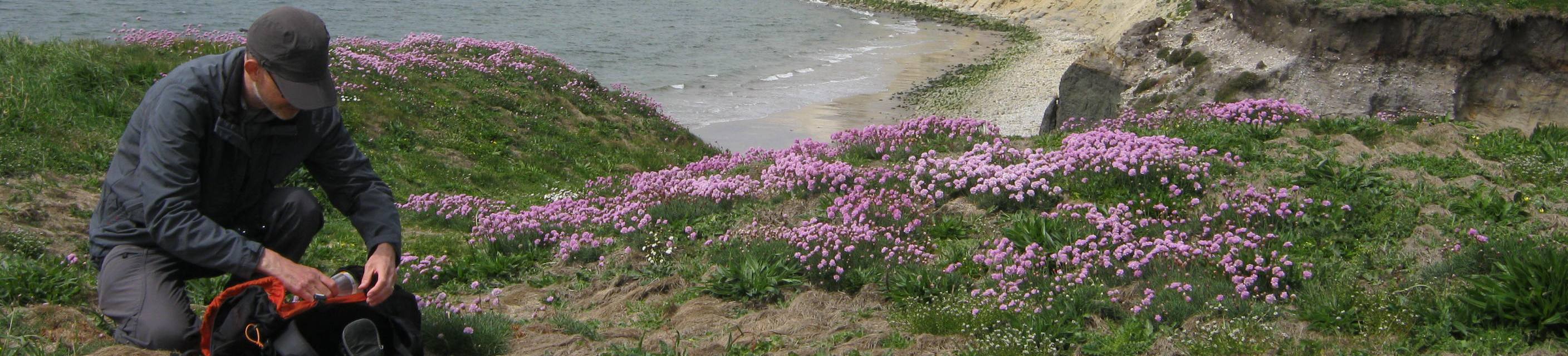
  • Thrift, Armeria maritima 17 April, 2024
  • Japanese Kerria, Kerria japonica 29 March, 2024


All my posts

Complete list of blog posts


Select by date


Select by category

Site content copyright © 2012 - 2025 Jeremy Bartlett.
↑