↓
 

@jeremybartlett.bsky.social

Generic selectors
Exact matches only
Search in title
Search in content
Post Type Selectors
Filter by Categories
Edible
Foraging
Fungi
General
Ornamental
Poisonous

Jeremy Bartlett's LET IT GROW blog

The wonder of plants and fungi.

Jeremy Bartlett's Let It Grow Blog
  • Homepage
  • About Let It Grow
  • Contact Me
  • All My Posts
"People from a planet without flowers would think we must be mad with joy the whole time to have such things about us." - Iris Murdoch

Post navigation

← Previous Post
Next Post→

Signs of Spring in Earlham Cemetery

Jeremy Bartlett's LET IT GROW blog Posted on 27 January, 2012 by Jeremy Bartlett17 January, 2016

In the last week we have the very first signs of spring in our local cemetery: snowdrops in flower, hazel catkins and crocuses in bud.

However, with low temperatures forecast for next week, winter still has a long time to run…

Hazel catkins

Hazel catkins

Crocuses in bud

Crocuses in bud, Earlham Cemetery, Norwich

Snowdrops in Earlham Cemetery, Norwich

Snowdrops in Earlham Cemetery

Posted in General | Tagged catkins, Crocuses, Earlham Cemetery, Hazel Catkins, Norwich, Snowdrops

Calabrese, Brassica oleracea

Jeremy Bartlett's LET IT GROW blog Posted on 25 January, 2012 by Jeremy Bartlett17 January, 2016
Calabrese

Calabrese – fresh from the allotment

I’ve just picked another crop of Calabrese (Brassica oleracea ‘Italica’ group) from the allotment.

I love Purple and White Sprouting Broccoli as well, and they’re a treat in spring when very little else is available. I sow the seeds in April, plant out seedlings in June and then eat the heads the following March or April.

But with Calabrese you get a crop the same year you plant it, so you can sow seeds in April and harvest the heads in September. In a milder winter the larger first heads are followed by several lots of smaller ones, like those I picked today. In cold spells growth slows down and in a harsh winter like that of 2010-11 the plants can be killed off altogether.

I have to net the plants to keep out hungry pigeons and in late summer I pick off Large White (Pieris brassicae) and Small White (Pieris rapae) caterpillars, but I reckon it’s worth it.

Calabrese and Broccoli are very tasty and also good for you, with Vitamin C, carotenoids, fibre and various beneficial compounds. One particular compound, glucoraphanin, is metabolised into sulforaphane, which appears to have anti-cancer properties. You need to steam your Calabrese or Broccoli to obtain full benefits.

If you go to Marks and Spencer you’ll see “Beneforté” Broccoli (actually a form of Calabrese), which has been bred by Norwich’s Institute of Food Research and John Innes Centre to contain high levels of glucoraphanin.

I’ll stick to my own Calabrese and Broccoli for now. Nothing beats a trip to the allotment to pick the tender young shoots, except eating them, lightly steamed, as a side vegetable.

To grow your own Calabrese see the Allotment Vegetable Growing website. I used to raise my plants in modules but last year I sowed seed in a nursery bed on the allotment and the plants were much better – stronger and more numerous – in spite of a spring drought. I like variety “Chevalier F1”, which has given me bigger heads than the non-F1 “Green Sprouting”.

To find out more about Broccoli and Calabrese’s nutritional qualities and much else, see Wikipedia. Beware that “broccoli consumption is … associated with malodorous flatulence” because of the sulphur compounds the vegetable contains. But this is surely a price worth paying?
Posted in Edible | Tagged Brassica oleracea, broccoli, calabrese, glucoraphin

The Garden at The Belvedere Centre

Jeremy Bartlett's LET IT GROW blog Posted on 22 January, 2012 by Jeremy Bartlett1 November, 2018

One of my current projects is to revamp the garden at The Belvedere Centre, our local community centre in Norwich.

There are borders in front of the community centre and a delightful gated, wooded garden at the back. But both have been neglected for a number of years and need quite a lot of work.

Last August, with a team of enthusiastic volunteers, we cleared brambles, privet and sycamore seedlings from part of the back garden.

In October Vanna and I planted perennials and shrubs in the borders by the car park at the front of The Belvedere Centre.

Another part of the renovation was to do some tree work, with the blessing of Norwich City Council tree officers, to remove congested branches and fell a couple of rather spindly trees from a row of five Snakebark Maples. This work took place between October and January and the garden already looks much better. We’ve used some of the logs to create habitat piles here and in the Grapes Hill Community Garden.

We’ve drawn up a planting plan for the back garden and will do more clearing then planting during the next three months, so that we should hopefully have a much improved garden by the time summer comes.

Read the next update about the garden.

Belvedere - before clearance

Before clearance, September 2011

After clearance

After clearance, November 2011

Planting shrubs

Planting shrubs at front of Centre, October 2011

Tree surgery

Tree surgery, January 2012

Posted in General | Tagged Belvedere Centre, Grapes Hill Community Garden

Post navigation

← Previous Post
Next Post→
Want to read more? Here is a full list of my blog posts.

Subscribe to Blog via Email

Enter your email address to subscribe to this blog and receive notifications of new posts by email.

Thirty latest posts

  • Hothouse Conecap, Conocybe intrusa 29 March, 2026
  • Fairy Foxglove, Erinus alpinus 27 February, 2026
  • Dwarf Thistle, Cirsium acaule 10 January, 2026
  • Zythia resinae (aka Sarea resinae) 30 December, 2025
  • Golden Conecap, Conocybe aurea 20 November, 2025
  • Five Fungi from Sweet Briar Marshes 23 October, 2025
  • Steccherinum oreophilum (aka Irpex oreophilus) – new for Norfolk 27 September, 2025
  • Orpine, Hylotelephium telephium 29 August, 2025
  • Wild Marjoram, Origanum vulgare 19 July, 2025
  • Goldilocks Buttercup, Ranunculus auricomus 5 June, 2025
  • Tree Lupin, Lupinus arboreus 28 May, 2025
  • American Skunk-cabbage, Lysichiton americanus 21 April, 2025
  • Cedar Cup, Geopora sumneriana 16 March, 2025
  • Cinnamon Bracket, Hapalopilus nidulans 13 February, 2025
  • Common Ragwort, Jacobaea vulgaris 13 January, 2025
  • Holly, Ilex aquifolium 7 December, 2024
  • Yellow Bird’s-nest, Hypopitys monotropa 24 November, 2024
  • Whiskery Milkcap, Lactarius mairei 8 November, 2024
  • Shaggy Bracket, Inonotus hispidus 25 September, 2024
  • Small Teasel, Dipsacus pilosus 24 August, 2024
  • Rothole Inkcap, Coprinopsis alnivora 1 August, 2024
  • Twinflower, Linnaea borealis 20 July, 2024
  • Foxglove, Digitalis purpurea 10 June, 2024
  • Beaked Hawk’s-beard, Crepis vesicaria 15 May, 2024
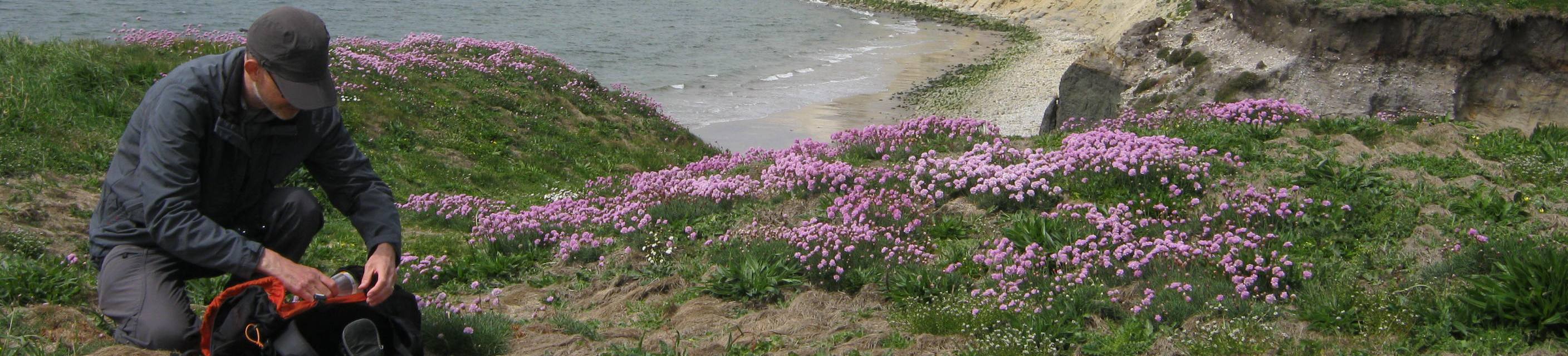
  • Thrift, Armeria maritima 17 April, 2024
  • Japanese Kerria, Kerria japonica 29 March, 2024
  • Golden Bootleg, Phaeolepiota aurea 12 March, 2024
  • Arched Earthstar, Geastrum fornicatum 22 February, 2024
  • Basil Thyme, Clinopodium acinos 3 January, 2024
  • Five Fungi from the Lanes of Norfolk 9 December, 2023


All my posts

Complete list of blog posts


Select by date


Select by category

Site content copyright © 2012 - 2025 Jeremy Bartlett.
↑